
destinations
The Most Beautiful Tourist Places in Tolima
Discover the diverse tourist attractions of Tolima and get inspired for your next trip. Explore one of Colombia's most contrasting departments.
16 Januar 2026
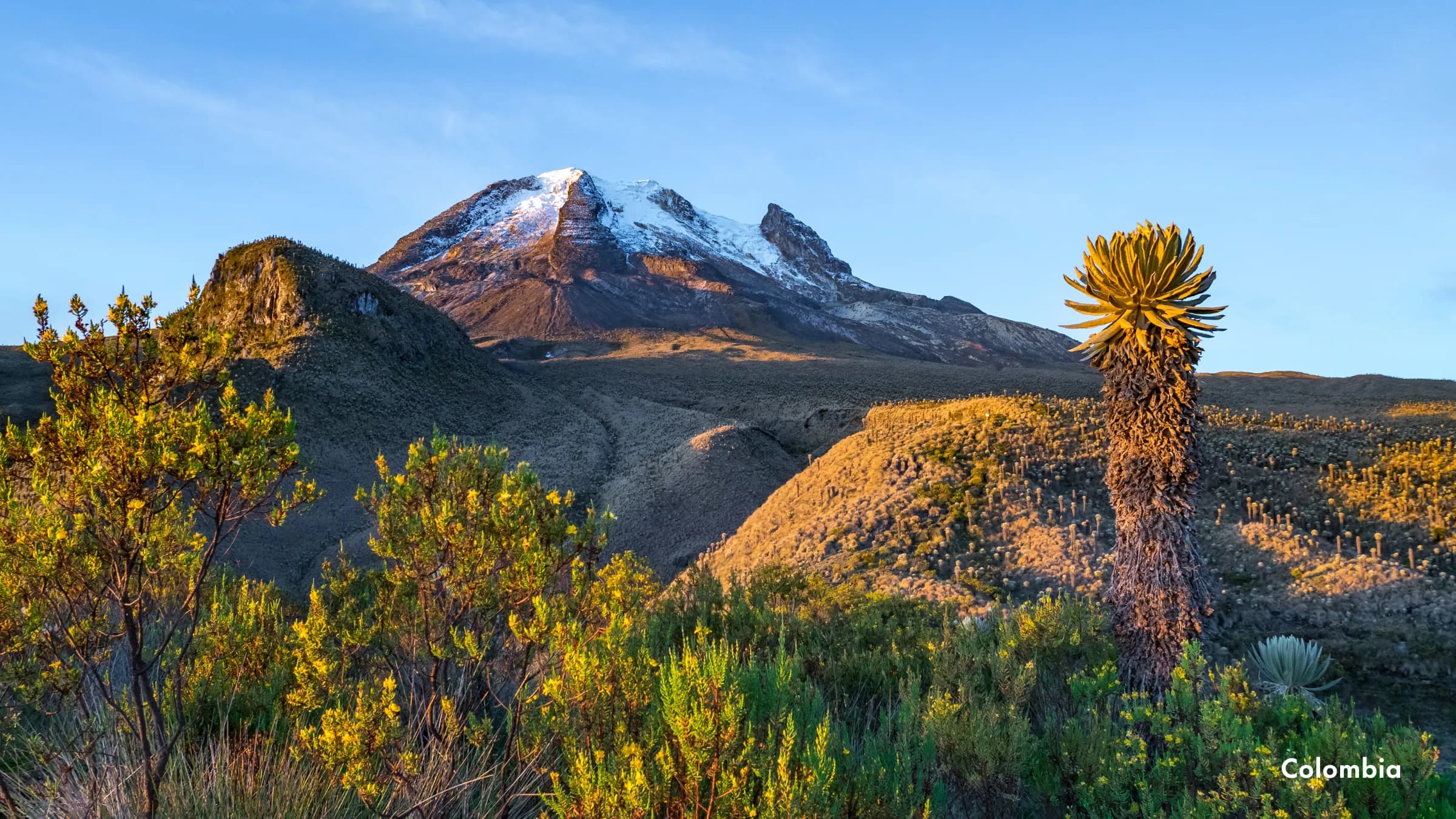
Discover the diverse tourist attractions of Tolima and get inspired for your next trip. Tolima is one of Colombia's departments with the most striking contrasts.
This tourist destination is a natural paradise offering something special and unique for every traveler, whether it's breathtaking mountains, impressive rivers and waterfalls, one of Colombia's largest dams for water activities, or captivating stories reflected in the colorful alleys of its towns.
Come to Tolima and discover why this is a Natural Paradise! #TolimaNaturalParadise
Honda
Its historic center preserves the glory of an era when it was the commercial hub of the colony, serving as the essential riverine point connecting Santa Fe with the ports of Barranquilla and Cartagena. Its colonial houses and streets evoke the prosperity of this place in past times, which has been a benchmark in the country's history and economy. One example of the area's resilience is the Navarro Bridge. This was the first of its kind in South America. The structure was acquired from the San Francisco Bridge Company, the same company that built the famous Golden Gate in San Francisco, United States. Consequently, it has been declared a heritage town of Colombia.
What to see in Honda? Things to do in Honda
Discover the Historic Center of Honda.
Calle de las Trampas.
River Museum.
Mariquita
For eight years, it was the heart of the botanical expedition. The House of Painters was founded here, and Mutis's Forest was where various plant species, such as cinnamon trees, were studied for medicinal purposes. The House of the Botanical Expedition is now a museum that compiles the life and work of José Celestino Mutis and showcases various plants that were subjects of research. A few meters away is the Church of the Miraculous Lord of the Hermitage, which features a classic Iberian bell tower. Inside, it houses an important relic of faith, the Lord of Miracles, believed to have provided protection to travelers during the colonial era.
What to see in Mariquita?
House of the Botanical Expedition.
Explore Mutis's Forest.
Falán
Falán's remote geography makes it a very interesting place for amphibian and reptile spotting. Here, José Celestino Mutis explored the Gold and Silver Mines. The tunnels of the Royal Mines of Santa Ana, surrounded by lush vegetation, tell the story of colonial mining in the 19th century and the advancements Mutis introduced in this field.
What to do in Falán?
Discover the Lost City and the Royal Mines of Santa Ana.
Visit the Waterfall.
Armero
The awakening of a Sleeping Lion, the Nevado del Ruiz, led to the disappearance of Armero in 1985 due to a landslide that took the lives of approximately 25,000 people. Today, at the Armero Visitor Center, you can take a tour that covers the geology, history, and faces of the people who lived in this fruitful city, known as the “White City.” You can also see all the monuments sent from many corners of the world in solidarity with this tragic event and the emblematic Campo Santo declared by Pope John Paul II during his visit in 1986.
What to see in Armero?
Explore Campo Santo.
Visit the City Ruins.
Murillo
This cozy place welcomes visitors with the spectacular and imposing view of the snowy summit of Nevado del Ruiz, where you can enjoy one of the most beautiful views in Colombia's cordillera region.
What to do in Murillo?
Catch a glimpse of Nevado del Ruiz.
Walk through the Páramo.
Bathe in hot springs.
Ambalema
Known as Colombia's tobacco city. It was declared a National Historic Monument in 1980, and its unique architecture earned it the nickname “The City of 1,001 Columns,” where the distinctiveness of its houses built in bahareque, a mixture of water and earth, evokes these colonial times. Among them is the Factoría Mill, a house where fine tobacco was produced and primarily exported to Europe, said to be of the highest quality at the time.
Tour the Malecón.
Old Train Station.
Navigate the Magdalena River on a raft.
Ibagué
Ibagué, four centuries ago, was the land of the fierce and strong Pijao indigenous people, which is why it became known as the “Valley of Spears.” With Spanish colonization, the city was founded in 1550 to serve as a strategic control point for the so-called Quindio Road, a route that connected eastern and western Colombia and fostered the exchange of races and cultural wealth. As a result, this identity is reflected today in colorful folklore, delicious gastronomy, and music; making it a renowned cultural epicenter for one of the country's most beautiful celebrations, “The Colombian Folkloric Festival,” held every July.
What to see in Ibagué? Tourist places and experiences in Ibagué
City tour with local food tasting - Musical Picnic.
Visit the Tolima Conservatory of Music.
Visit a music studio.
Discover Colombia's largest Wax Palm Forest.
Ride a cable car over the Combeima Canyon.
Discover Nevado del Tolima.
Prado
An immense dam forms an idyllic landscape of calm waters bordered by mountains, offering beautiful views in this place.
What to see in Prado? Discover things you can do in Prado
Explore the dam on the 'Chiva Náutica' (Nautical Chiva bus).